
The matrix inverse is defined only for square nonsingular matrices. A generalized inverse is an extension of the concept of inverse that applies to square singular matrices and rectangular matrices. There are many definitions of generalized inverses, all of which reduce to the usual inverse when the matrix is square and nonsingular.
A large class of generalized inverses of an 



Here, the superscript 
Condition (1) implies that if 



A (1,3) inverse can be shown to provide a least squares solution to an inconsistent linear system. A (1,4) inverse can be shown to provide the minimum 2-norm solution of a consistent linear system (where the 2-norm is defined by 
There is not a unique matrix satisfying any one, two, or three of the Moore–Penrose conditions. But there is a unique matrix satisfying all four of the conditions, and it is called the Moore-Penrose pseudoinverse, denoted by 


The pseudoinverse can be expressed in terms of the singular value decomposition (SVD). If 






In MATLAB, the function pinv computes 

For square matrices, the Drazin inverse is the unique matrix 

where 


If 


The Drazin inverse can be represented explicitly as follows. If
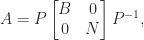
where 


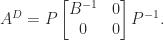
Here is the pseudoinverse and the Drazin inverse for a particular matrix with index 
![A = \left[\begin{array}{rrr} 1 & -1 & -1\\[3pt] 0 & 0 & -1\\[3pt] 0 & 0 & 0 \end{array}\right], \quad A^+ = \left[\begin{array}{rrr} \frac{1}{2} & -\frac{1}{2} & 0\\[3pt] -\frac{1}{2} & \frac{1}{2} & 0\\[3pt] 0 & -1 & 0 \end{array}\right], \quad A^D = \left[\begin{array}{rrr} 1 & -1 & 0\\[3pt] 0 & 0 & 0\\[3pt] 0 & 0 & 0 \end{array}\right].](https://s0.wp.com/latex.php?latex=A+%3D+%5Cleft%5B%5Cbegin%7Barray%7D%7Brrr%7D+1+%26+-1+%26+-1%5C%5C%5B3pt%5D+0+%26+0+%26+-1%5C%5C%5B3pt%5D+0+%26+0+%26+0+%5Cend%7Barray%7D%5Cright%5D%2C+%5Cquad+A%5E%2B+%3D+%5Cleft%5B%5Cbegin%7Barray%7D%7Brrr%7D+%5Cfrac%7B1%7D%7B2%7D+%26+-%5Cfrac%7B1%7D%7B2%7D+%26+0%5C%5C%5B3pt%5D+-%5Cfrac%7B1%7D%7B2%7D+%26+%5Cfrac%7B1%7D%7B2%7D+%26+0%5C%5C%5B3pt%5D+0+%26+-1+%26+0+%5Cend%7Barray%7D%5Cright%5D%2C+%5Cquad+A%5ED+%3D+%5Cleft%5B%5Cbegin%7Barray%7D%7Brrr%7D+1+%26+-1+%26+0%5C%5C%5B3pt%5D+0+%26+0+%26+0%5C%5C%5B3pt%5D+0+%26+0+%26+0+%5Cend%7Barray%7D%5Cright%5D.+&bg=ffffff&fg=222222&s=0&c=20201002)
Applications
The Moore–Penrose pseudoinverse is intimately connected with orthogonality, whereas the Drazin inverse has spectral properties related to those of the original matrix. The pseudoinverse occurs in all kinds of least squares problems. Applications of the Drazin inverse include population modelling, Markov chains, and singular systems of linear differential equations. It is not usually necessary to compute generalized inverses, but they are valuable theoretical tools.
References
This is a minimal set of references, which contain further useful references within.
- Adi Ben-Israel, The Moore of the Moore–Penrose Inverse, Electron. J. Linear Algebra 9, 150–157, 2002.
- Adi Ben-Israel and Thomas N. E. Greville, Generalized Inverses: Theory and Applications, second edition, Springer-Verlag, New York, 2003
- Stephen Campbell and Carl Meyer, Generalized Inverses of Linear Transformations, Society for Industrial and Applied Mathematics, Philadelphia, PA, USA, 2009. published (Originally published by Pitman in 1979.)
- Stephen J. Kirkland and Michael Neumann, Group Inverses and
-Matrices and their Applications, Chapman and Hall/CRC, 2013
- Guorong Wang, Yimin Wei and Sanzheng Qiao, Generalized Inverses: Theory and Computations, second edition, Springer-Verlag, Singapore, 2018.
Related Blog Posts
- What is a Matrix? (2020)
This article is part of the “What Is” series, available from https://nhigham.com/category/what-is and in PDF form from the GitHub repository https://github.com/higham/what-is.
 rows and
  columns and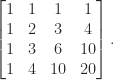
 for all
  and
and  , where
  denotes the entry at the intersection of row
  matrix
  matrix
  matrix
  defined by the formula
 , both
  and
and  are defined, but they are generally unequal: matrix multiplication is not commutative.
 , where
  is the identity matrix, which has ones on the main diagonal (that is, in the
  position for all
  , is the
  matrix whose
  entry is
  . For a complex matrix, the conjugate transpose, written
  or
or  , has
, has  .
. , row vectors are
  , and scalars are
  .
. from
from  to
to  to
to  , the backward error in
  such that
  , for some appropriate measure of size. There can be many

 of two vectors the backward error of an approximation
  can be defined as
 . It can be shown that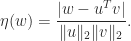
 is clearly unsymmetric in that
  is perturbed but
  is not. If
  and
and  and no explicit formula is available for
  of two
  is unlikely to be of rank 1, so
  is not in general possible for any
  is bounded in terms of the backward error
  by
by

 . More correctly, this is the condition number with respect to inversion, because a relative change to
  can change
  by a relative amount as much as, but no more than, about
  for small
  is also the condition number for a linear system
  are the data).
 for any norm for which
  (most common norms, but not the Frobenius norm, have this property) and that

 , with approximate equality for some
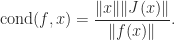
  can be given in terms of the Jacobian matrix,
  :
:
 , so
, so  . Hence, for example,
  .
. is a simple (non-repeated) root of the polynomial
  then the data is the vector of coefficients
 ![a = [a_n,\dots,a_0]^T](https://s0.wp.com/latex.php?latex=a+%3D+%5Ba_n%2C%5Cdots%2Ca_0%5D%5ET&bg=ffffff&fg=222222&s=0&c=20201002) . It can be shown that the condition number of the root
. It can be shown that the condition number of the root  -norm,

 produce small changes in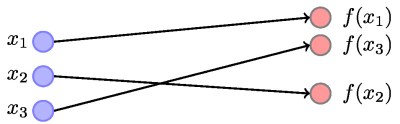
 and
and  illustrates).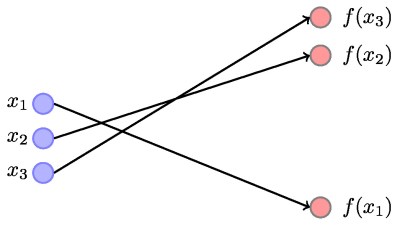
 .
. ) of the posts available on GitHub in the repository
  Nick Higham